 España
 United States of America
 United Kingdom
 Argentina
 Ireland
 México

Route optimization for fleets means deciding which vehicle makes each stop, in what order and at what time, so that the same work gets done with fewer kilometers, less waiting and more deliveries on time. This guide was updated in November 2026 with a six-step planning method, what changes by vehicle type and how to measure the real savings.
1. What is route optimization in logistics and fleet management?
Route optimization is the process of calculating and assigning the most efficient routes for each vehicle in a fleet, using variables such as traffic conditions, stops, estimated time of arrival (ETA), load constraints, and delivery schedules. Its goal is to reduce costs, save time, and maximize operational efficiency.
In practice, this involves the use of advanced algorithms and specialized software that can generate dynamic routes and adjust them in real time. It’s no longer just about drawing paths on a map—it’s about doing more with fewer resources.
2. Why is it important to implement a route optimization solution for fleets in 2026?
With the growth of e-commerce, the demand for faster deliveries, and increasing pressure to reduce emissions, route optimization is essential to remain competitive. In 2026, companies that do not automate route planning face:
- Higher operating costs
- Frequent delays
- Lower customer satisfaction
- Excessive fuel consumption and maintenance costs
In addition, many European countries already require environmental reporting and emissions control in transportation. Route optimization helps companies comply with these regulations.
3. Key benefits of route optimization for transportation companies
- Cost reduction: Fewer miles driven, lower fuel consumption, and reduced maintenance. In typical deployments measured by Deiviator, logistics costs fall by 10–25% (see the estimates in section 8 and their small print).
- Improved on-time performance: Better compliance with delivery schedules and time windows.
- Better resource utilization: Vehicles and drivers are assigned more efficiently.
- Lower environmental impact: Reduced CO₂ emissions by eliminating unnecessary trips.
- Higher customer satisfaction: More predictable and trackable deliveries.
4. How route optimization software works
4.1 Algorithms and variables it considers
- Estimated time of arrival (ETA)
- Real-time traffic conditions
- Distance and travel time between stops
- Delivery time windows
- Cargo type and constraints (weight, temperature)
- Loading and unloading times
- Vehicle and driver availability
4.2 Step-by-step practical example
- Daily addresses and constraints are entered into the system.
- The software analyzes multiple possible combinations.
- An optimized route is generated for each vehicle.
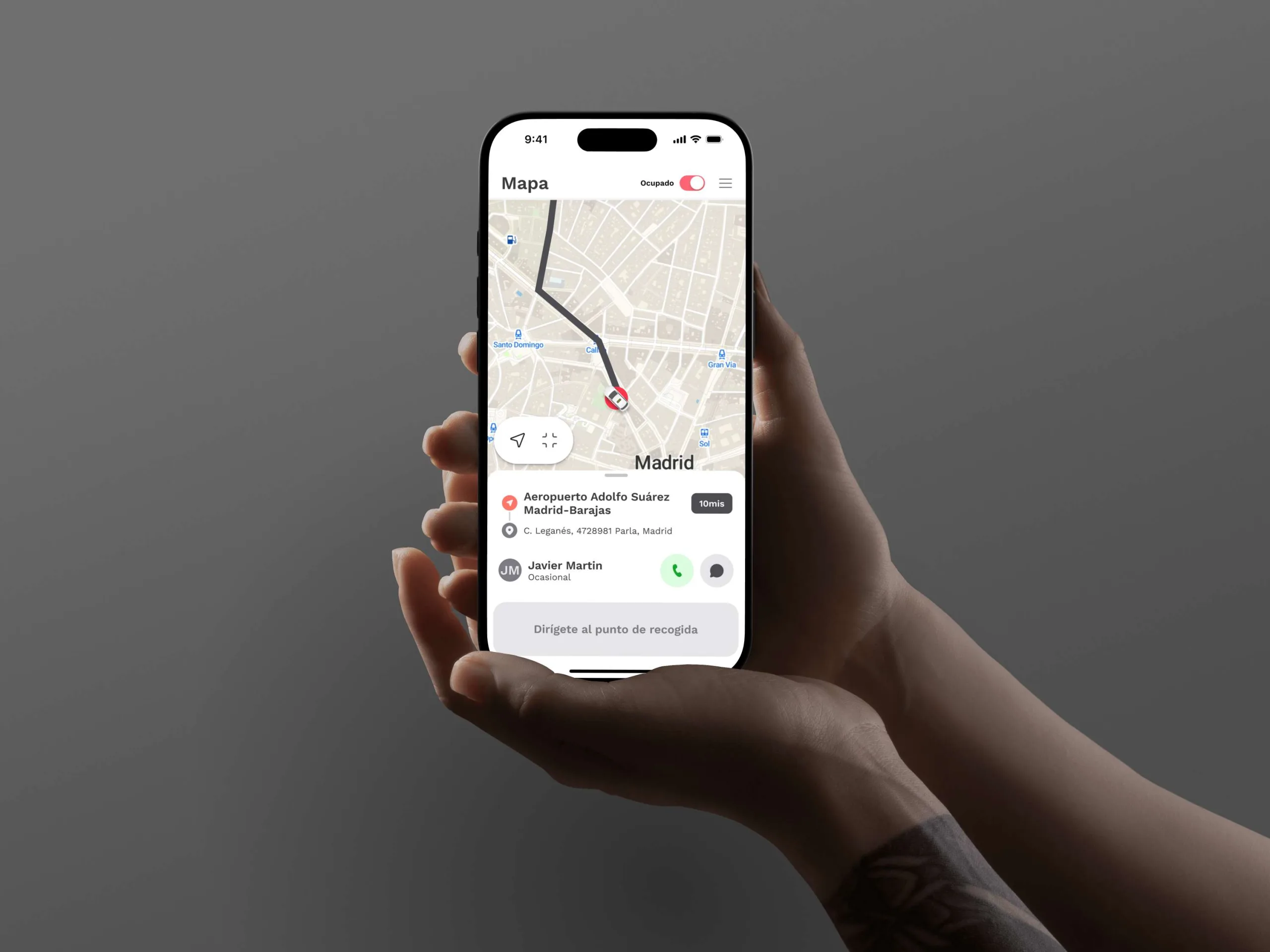
- The driver receives the route directly in their app.
- Routes can be adjusted in real time if conditions change.
5. Types of route optimization software
5.1 Logistics-focused SaaS platforms
Platforms such as Routific or Onfleet offer cloud-based software specifically designed for route optimization, with tracking, alerting and analytics features. Deiviator is a fleet management and dispatch platform rather than a route optimizer: for delivery fleets, «Plan route» puts each day’s pending orders onto the route of the courier you choose, one stop per order, in the order you set, with its load sheet, and the delivery map shows the status of every stop. It does not calculate the best order of the stops for you.
5.2 TMS platforms with routing modules
Some Transportation Management Systems (TMS) include routing modules, allowing planning, monitoring, and billing to be integrated within a single environment.
5.3 Mobile apps for drivers
These complement the core software and allow drivers to view their routes, confirm deliveries, and report incidents directly from their mobile devices.
6. How to choose the best route optimization software for your fleet
6.1 Key criteria
- Ease of use
- Scalability (can it grow with your business?)
- Integrations (ERP, CRM, GPS)
- Technical support
- Customization
6.2 Quick comparison
| Software | Cloud-based | Mobile | AI | Support | Integrations |
|---|---|---|---|---|---|
| Deiviator | ✅ | ✅ | Only for phone bookings (AI Call Center), not for routing | ⭐⭐⭐⭐ | API; ERP and other systems depending on scope |
| Option B | ✅ | ✅ | ❌ | ⭐⭐ | Limited |
| Option C | ❌ | ❌ | ❌ | ⭐ | None |
How to plan and optimize fleet routes in 6 steps
- Close orders at a fixed time. If orders keep coming in while you plan, you will never have a stable route. Set a cut-off time and move anything that arrives later to the next day, except urgent jobs.
- Group by zones. Split your territory into zones that one vehicle can cover in a working day. Assign each customer to a zone and try to serve customers in the same zone on the same days. Recurring routes are easier to optimize than routes that change every day.
- Order by time window first, then by distance. Put the stops with the earliest or narrowest windows first. Once they are fixed, fill the gaps with the nearest flexible stops. This avoids the classic route that looks perfect on the map but arrives late at the first customer.
- Balance the workload between vehicles. Compare routes by total time (driving plus stops), not just by number of stops. Ten stops in an industrial estate may take less time than six in a historic city center.
- Give the driver the route on their phone. A route that is printed and reordered by hand in the van is no longer optimized. Drivers need to see the order, each customer’s window, how to get there and a button to call; if something changes, it is adjusted from the office.
- Measure and correct. At the end of the day, compare the plan with what actually happened: failed stops, arrivals outside the window, return times. Use that data to correct stop times, windows and zones. Optimization is a cycle, not a one-off adjustment.
Route optimization by vehicle type
The same list of stops is not ordered the same way for every vehicle in a fleet:
- Urban delivery van: time windows and unloading time matter most. Many short stops, difficult parking and, increasingly, access restrictions in city centers.
- Truck: weight, dimensions, the streets it can use and the driver’s driving and rest times count for more.
- Refrigerated vehicle: chilled orders should go first or on the shortest leg from departure.
- Electric vehicle: the route has to fit within its range, with a margin, or include where it charges.
- School or passenger minibus: stops repeat at the same time every day, and punctuality at each stop and the seats on board are what matter. See our school transport route software.
7. Common mistakes when planning routes without technology
- Repeated or poorly assigned routes
- Excessive miles driven
- Inefficient fuel usage
- Overloading certain drivers
- Lack of delivery traceability
8. Economic impact: how much you can save by optimizing your routes
These are Deiviator’s estimates for typical route-planning deployments, calculated from classic use cases we have measured with customers:
- A 10–25% reduction in logistics costs
- A 20% decrease in route time
- Up to 30% fewer CO₂ emissions
These figures are indicative estimates, not an external study. Deiviator calculated them from typical deployments measured with its own customers, whose names we do not publish. Every operation starts from a different place: the result depends on your fleet, your routes, your type of service and how you plan today, so measure your own starting point before comparing.
How to measure the savings of a route optimizer
Generic savings figures are of little use: what counts is what happens in your fleet. Measure one month before and one month after, with the same indicators:
- Kilometers per stop delivered.
- Stops delivered per working hour.
- Percentage of deliveries within the time window.
- Failed deliveries and repeated stops.
- Average return time and overtime.
To turn those kilometers into money, multiply them by your cost per kilometer, which includes energy, maintenance, insurance and the depreciation of each vehicle.
An example with numbers
Take a distributor with 2 vans and 40 stops a day in a medium-sized city. If each stop takes 8 minutes, that is 320 minutes of stops, more than 5 hours between the two vans, plus driving time.
Now suppose that 4 deliveries a day fail because the van arrives outside the customer’s hours, and each one means going back another day. In this example, cutting failed deliveries from 4 to 1 saves 3 repeated stops a day, about 15 a week over five delivery days, without changing a single kilometer of the route. That is why, in urban delivery, respecting time windows can save as much as cutting distance. These are illustrative figures, not a customer case.
9. Route optimization trends for 2025 and beyond
- Use of predictive artificial intelligence
- Sustainable routes with lower environmental impact
- Full automation of route planning
- Hyper-personalized deliveries (B2C and B2B)
- IoT integration with fleet sensors
Frequently asked questions
What is fleet route planning?
It means deciding, before vehicles leave, which orders or services each one handles, in what order and on what schedule, based on addresses, delivery windows, the time each stop takes, the load and each driver’s working day. It is reviewed at the end of the day against what really happened.
How can route optimization reduce fuel use?
By removing kilometers and waiting: fewer detours, fewer failed deliveries that force a second trip, less time with the engine running because you arrive within the customer’s window, and fewer vehicles overlapping in the same area. The real saving depends on your fleet: measure kilometers per stop before and after.
How do you measure the savings of a route optimizer?
Compare one month before and one month after with the same indicators: kilometers per stop, stops per hour, deliveries within the window, failed deliveries and return times. Then turn the difference in kilometers into money with your cost per kilometer, which includes energy, maintenance, insurance and depreciation of each vehicle.
10. Conclusion: how to start optimizing routes today
Having a route optimization solution for fleets is no longer optional—it is a critical strategic tool. Implementing specialized software allows you to scale operations, reduce costs, and deliver a best-in-class logistics service. If your fleet delivers to customers, Deiviator gives you «Plan route», the load sheet, the delivery map and proof of delivery with the delivery photo and the receiver’s signature at every stop.
If you’d like to learn how to adapt it to your business, you can request a free demo or speak with an advisor to explore all the benefits. You can also download our Global Logistics Report 2025 to gain insights into the industry.

Reviewed by
David Barahona
Product and Technology · Deiviator
Writes about product, efficiency and workflow: how each fleet job is dispatched, tracked and closed.